When can a switch to Private Health Insurance (PKV) be problematic?
Written by Japveer Arora, IHK-certified insurance broker (§ 34d GewO)
Published 13 August 2026 · Last updated 18 August 2026
Private health insurance (PKV) in Germany has its advantages: lower premium costs when you are young, faster doctor appointments and on average more services than GKV. In case you are not familiar with the two systems, you can find a detailed overview of PKV and GKV on our website.
Despite the above mentioned advantages a membership in PKV brings, making a switch to PKV is not necessarily a good financial decision for everyone. We have identified six profiles who should think carefully before they switch to PKV.
- One working parent, one stay-at-home partner with children
- Someone with pre-existing health conditions
- Long parental / career break
- A self-employed person with uncertain income
- A late first-time switcher
- Someone expecting a modest retirement income
1. One working parent, one stay-at-home partner with children
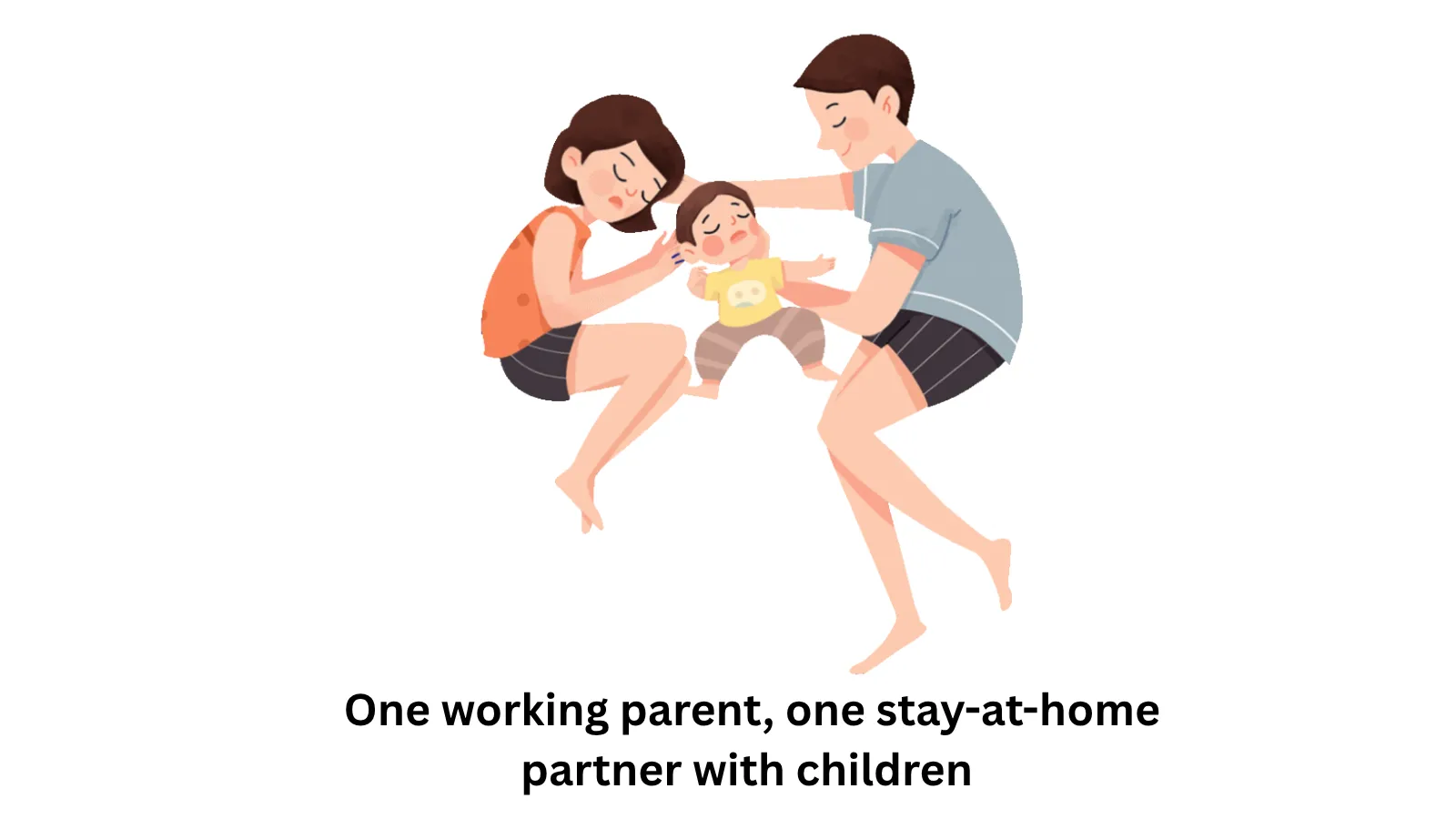
In this setup, if the working parent is in GKV, the stay-at-home partner and kids are covered for free in the GKV family insurance. On the other hand, if the working parent is in PKV, the stay-at-home partner and the children would need their separate PKV contracts. Paying for one GKV contract is highly likely to be cheaper than paying for 3 PKV contracts (or more depending on the number of children). You can use the calculator on our website, to get a rough estimate of how much you might be paying over your lifetime in the two systems.
2. Someone with pre-existing health conditions
Unlike GKV, PKV providers require you to undergo a health check before they would take you as a member. For certain health conditions, PKV providers might reject you all together or might not cover you for a specific health condition. For other conditions, they might impose a risk surcharge anywhere from 5% to 30%, depending on the condition. In case you are someone who has an existing health condition, work with an insurance broker to ask for an anonymous quote (Risikoanfrage) for yourself. Based on the risk surcharge in your quote, you can decide whether you are willing to cover the potential extra costs in PKV.
3. Long parental / career break
Maybe you are someone who has always dreamed about taking a longer career break to travel and experience different cultures. Or maybe you are someone, who wants to be there for their kids full-time for a longer period, rather than juggling work with kids. In either scenario, you should ask yourself what happens to your health insurance.
If you are a member in GKV, the monthly health insurance premium is a fixed percentage of your salary. You pay half of it yourself, the employer pays the other half. When you go on your break, you stop earning, but the GKV contributions don’t stop. In such a case, the GKV contributions are calculated on a minimum assessment base, which is €1318.33 per month in 2026. Taking the general contribution rate of 14.6% and the average supplementary rate of 2.9%, you would pay €231 monthly out of your pocket during the break, assuming no contribution from your employer. While your GKV contributions drop because the assessment base changes from your salary to the minimum assessment base, you still need to plan with that monthly expense while you are away from work.
If you are a member in PKV, going on a break doesn’t change anything because monthly PKV premiums depend on your tariff, not your salary. Being away from work can create a bigger financial burden in case of PKV. As an example, if your monthly PKV premium is €800, you would be paying ~€400 out of pocket when you are working, with the employer covering the other half. When you stop working, the employer half would fall away and you would need to pay €800 monthly out of your own pocket. Compare that to GKV. If you are monthly premium in GKV was €800, your out-of-pocket expense would drop from €400 to €231, when you are on your break.
4. A self-employed person with uncertain income
Self-employed people have one obvious disadvantage, when it comes to health insurance. They need to pay the entire monthly health insurance premium themselves, since they don’t have an employer covering the other half.
For many self-employed people, it is attractive to switch to PKV for many reasons. First, they are eligible for PKV as soon as they become self-employed without the Jahresarbeitsentgeltgrenze (JAEG) eligibility criteria. Second, in GKV, self-employed people pay contributions on all their income i.e. self-employed income as well as other income types such as capital or rental income. In PKV, the contributions depend on the tariff, making them more predictable. Third, being a PKV member could result in meaningful cost savings for a high-earning freelancer. Imagine a 35-year-old freelancer who earns €8000 per month. They would pay close to €1000 per month in GKV. In PKV, they could be covered in a good tariff for a lesser sum.
Despite the advantages, if you are self-employed with an uncertain or unstable income, it is worth waiting before rushing to switch to PKV. Your GKV contributions would adjust to your income as if it fluctuates, subject to the minimum assessment base. Your PKV contributions are not dependent on your income. In case your income reduces significantly, paying the monthly PKV contributions could become an extra burden.
5. A late first-time switcher
If you are a PKV member, it matters when you enter the PKV system. The older you are when you start in PKV, the less time you have to build old age reserves (Altersrückstellungen). Old-age-reserves is a regulated mechanism in private health insurance, as part of which PKV providers are legally required to impose a 10% surcharge from the ages of 22 to 60 on their members to build old-age reserves. As soon as a member turns 65, the PKV provider uses the accumulated old-age-reserves to keep the PKV premiums cost manageable as one gets older.
This means that a 50-year old joining a PKV provider today would pay more than the 50-year old who has been with the same PKV provider for more than 20 years. This is because the new member has much less time to build old-age-reserves and thus needs to pay a higher tariff premium. You can use the calculator on our website to check how your entry age affects the lifelong premium projections between PKV and GKV.
6. Someone expecting a modest retirement income
As soon as your retire, your employment income is replaced by your pension. For most people, their pension is lower than their employment income and their GKV contributions fall in line with the pension. If they qualify for the KVdR status in GKV, they only pay contributions on their pension and not on other types of income such as capital and rental income.
Things work differently in PKV. When you retire, the PKV contributions continue their normal trend. The 50% employer contribution falls away and your out-of-pocket share goes up, since the pension-zuschuss is not enough to cover the 50% employer portion. This results in a significant jump in PKV out-of-pocket expenses for many people when they retire, not because the PKV premiums increased but rather because the 50% employer portion fell away.
If you are someone, who expects a modest retirement income and savings, you should evaluate whether you can cover the expected higher PKV expenses during your retired phase.
These six profiles are some examples of where one should carefully think before switching to PKV. In case you are in GKV and hesitant to switch to PKV, it is better to stay in GKV until you can make an informed decision. Remember that it is easier to switch from GKV to PKV than the other way around.
Want to discuss your situation with us? Book a free 15-minute call.